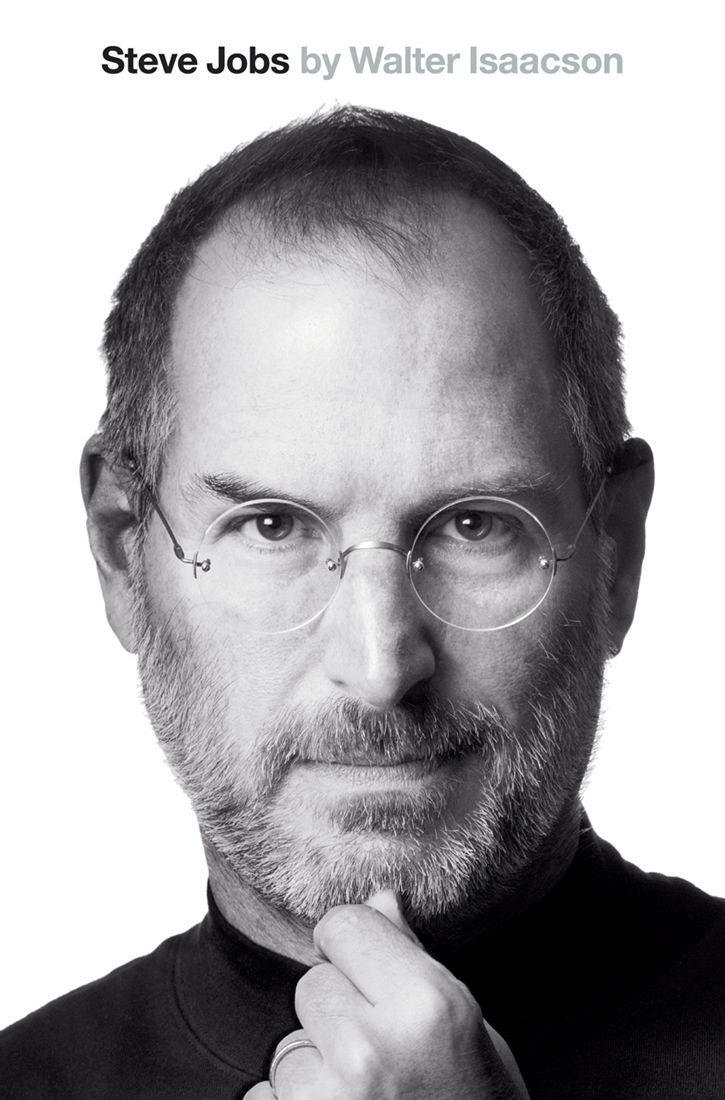
A video titled “Steve Jobs Unveils the iPhone in 2007” was posted on a Facebook Page. The followers, composed mostly of iPhone haters like me, littered the comment section, accusing Jobs of copying and pasting ideas and then going on to make a name for his own as an innovator and an inventor. To them, he was a thief since the Xerox days until his death in 2011.
We agreed in the comment section that he would go on and centralise the loot, hedge-fencing it with patents and a stricter closed source. He built an ecosystem incompatible with none in pursuit of profits and brand loyalty. But this portrayal of Steve Jobs as a Robin Hood of Silicon Valley who bought love from the masses is, as the comment section claimed, grounded on solid proof. Half-convinced, I commenced a hunt which involved consulting official and unofficial biographies and Mona Simpson’s (Job’s biological sister, separated from childhood) novel A Regular Guy to court-martial his case. I was surprised that even at the end I saw him not only as innocent but indeed the type of leader a game-changing vision needs. The world of tech was not going to be the same without him.
He admitted that he was not the first to do some things in the tech industry when iOS 4 was launched. He added, “but we are going to be the best.” This was the core of his leadership. He combined it with what Lawrence Levy’s To Pixar and Beyond summarised as a “level of strategy and patience akin to a leopard stalking its prey. He would settle for no less than a big kill.”
Ladies and gentlemen this is a rulebook of a leader according Steve Jobs:
- Get workers to perform their best. Get rid of those who can’t. There is no mediocre. It’s either one is bad or is good. This applies to ideas and products.
- Separate a good idea from bad ones; follow it up at the cost of everything. Get rid of the competition. The first iPod required securing exclusive rights to a new and off-demand storage format from Toshiba. The 10 million deal with Toshiba, though not much, was not any other OEMs of MP3 players were ready to do.
- Know that there is always a room left for other to copy, past and compete. This makes hedge-fencing your platform necessary, only if you were there first; unnecessary if you were not.
- Succeed and, thererefore, create a belief among those you lead that you are always right. While working on the iPhone, the workloads were intolerable but everyone in Jobs’ gravitational pull kept strong at it.
- Avoid total failure by following up blunders with right actions. The Motorola iPod was a disaster but the iPhone was not. Some might argue that the iPhone was not even perfect, but it did way better than the first attempt featuring Motorola. Jobs and his team kept working on it after its release, something Blackberry failed to do after launching the storm. You might say Blackberry followed up with the Storm 2.. Well they had fears of fully following up and they were following up in a while, reluctantly. Blackberry also failed to give up their hybrid touch-screen with poor physical keyboard elements.
- Do not be scared of following up an idea. Give it all the new changes it needs.
- Hire out of the box. Andy Hertzfeld, a software engineer, hired Susan Kare, his own high school friend to design the fonts the Mac would be known for.
- Steve convinced Chris Espinosa to drop out of College. Espinosa would develop a calculator for the Mac which remained unaltered for fifteen years.
Before he became a big predator. He was born to premarital and intercultural lovers who decided to put him up for adoption. His biological parents wanted his next parents to take him to college and so they wanted the adopters to be a couple that had attended college. But this did not happen as planned. The adopter, Paul Jobs, a mechanic, never attended College but he agreed to set up a College fund for Steve. According to the biographer Walter Isaacson, his being put up for adoption made his feel like the abandoned one. He grew up with a point a prove. I believe big people all have a single event that becomes the starting point of what will be known in their career. It is a Game-Changing origin event. All people have had theirs, but they failed to realise them. The realisation activates a reckless desire for a pursuit of a goal
Isaacson’s biography noted that from his adoptive father, Paul Jobs, Steve learned that a “hallmark of craftsmanship is making sure that even the aspects that will remain hidden are done beautifully.” Thanks to this mentality Apple was the first company to craft internal components of a computer down to the very minute detail.
Jobs was a leader who unified various bodies of knowledge instead of standing with what the studies had told him. He visited India and mastered the art of Zen Buddism which taught him simplicity, a standard that dripped into how Apple products are designed, and to value intuition over intellect. On this Bill Gates had to tell Isaacson, “He really never knew much about technology but he had an amazing instinct for what works.”
Steve Jobs dropped in classes of calligraphy at college and thanks to this he brought game-changing interfaces to the computer world. He never specialised. Dropping out of College gave him the room to exit the specialization circle but it did shut him out of the fully lucrative job sector and for him the option of joining the capitalist class became viable. You might prove me wrong by tossing in his time at Atari. He was on a spying mission, studying corporate structures and weaknesses among the ladders of giants of the time.
At Apple, Jobs had his ways of attracting investors, giving them power and fighting for some of it back. With engineers that’s a different thing. They are so excited when the product of their sweat makes it to the masses and attracts attention. “We have been there!” is the greatest part of the credit they are so content with. Good leaders try to give their engineers a time to shine. They take bold and practical steps to deliver products that will not disappoint the engineers.
One can believe in himself. Anyone cane do that but Jobs went past self-belief. According to Bill Atikinsom he could “deceive himself”. A belief can only create a pragmatic result. Self-deception, if given resources and a cost unheard of, creates a result for any vision, even a dystopian one. But self-deception is gamble. When it failed one. It fails him completely.
The journey of Steve Jobs at Apple was one of deadlines, a battle with Sculley in the mid-80s, pushing the workers to extremes and working beyond any family man would do. Sometimes his strategies backfired but, in the end, he was able to create a legacy. The sphere of consumer electronics, software and media distribution was not going to be the same without him. Steve Jobs passed away in 2011, aged 56. Tim Cook replaced him as CEO at Cupertino.





 Socien's Blog
Leave a comment